
Blood Tests: Guides Types, Results & How They Work

Blood Tests Information

Blood test results ought to always be interpreted by professionals in the medical field. However, it’s also a good thing to have background knowledge of blood tests. A blood test is that test requested by a doctor to be able to make the diagnosis. To carry out a blood test, qualified health care professionals extract a blood sample inside a vein, usually in the arm, with the use of a syringe. A typical blood test checks electrolytes in your body and could also examine complete blood count, blood glucose level, and liver enzyme levels.
Why would you get a blood test?:
| Reason for Blood Test | Details / Purpose |
|---|
| Investigate symptoms | Find the cause of symptoms such as fatigue, weight loss, weakness, fever, or bruising. |
| Assess blood loss | See how much blood has been lost if there is bleeding. |
| Diagnose polycythemia | Identify abnormal increase in red blood cells. |
| DNA testing | Check for inherited conditions or gene mutations. |
| Detect infection | Find presence of infections in the body. |
| Diagnose blood diseases | Identify diseases such as leukemia. |
| Check organ damage | Assess any damage to internal organs. |
| Determine blood type | Identify your blood group. |
| Detect anemia | Find low red blood cell count. |
| Measure chemical levels | Test levels of enzymes, electrolytes, oxygen, and carbon dioxide. |
| Monitor treatments | Check how the body responds to certain drugs or radiation therapy. |
| Assess abnormal bleeding | Understand effects on blood cells and counts. |
| Cholesterol levels | Determine the levels of cholesterol in the blood. |
| Pre-surgery screening | Screen for high or low values before surgery. |
| Cell count evaluation | Check for too many or too few specific types of cells, e.g., high eosinophils may indicate allergies or asthma. |
Types of Blood Tests

Some of the most common blood tests are:
Each test is outlined below. For more tests visit our Blood Tests categories
- A complete blood count (CBC)
- Blood chemistry tests
- Blood enzyme tests
- Blood tests to measure heart disease risk and cardiac risk
- Thyroid function test
- Blood tests to measure hormone levels
Complete Blood Count Test
A Complete Blood Count (CBC) blood test examines white blood cells (WBC), red blood cells (RBC) and platelets. It will likewise look for hemoglobin levels and hematocrit. A low (RBC) count is likely to suggest that you have anemia. The (RBC) count is going to be abnormally high for those who have fluid loss in the body because of diarrhea, dehydration, or burn. An extremely high (WBC) count shows the existence of infection. The (CBC) examination procedures numerous elements of your blood, as mentioned in this posting below.
Complete Blood Count
Complete Blood Count
- White Blood Cell (WBC): The total count of white blood cells per volume of complete blood. Irregular levels may suggest an infection, particular sorts of the leukemia disease, or even bone marrow diseases.
- Red Blood Cell (RBC): The total count of red blood cells per volume of complete blood. Irregular red blood cell levels can be a manifestation of anemia, dehydration or possibly blood loss.
- Hemoglobin (Hgb): Hemoglobin is the quantity of oxygen transporting protein contained within the red blood cells. Irregular levels may suggest anemia, red blood cell dysfunction, or even vitamin deficiencies.
- Hematocrit (Hct): Hematocrit is the area of the blood volume populated by red blood cells. Irregular levels would suggest anemia, bone marrow breakdown, as well as certain types of cancers.
- Platelet (thrombocytes) count: Very clear cell fragments which can be produced from fragmentation of precursor megakaryocytes. When the volume of platelets is not high enough, extreme blood loss could happen, in the event the volume of platelets is too high, blood clots can build thrombosis which can eventuate into a stroke, myocardial infarction, pulmonary embolism or the congestion of blood vessels.
- Mean platelet volume (MPV): is an apparatus that measures typically the average dimensions of platelets seen in blood, and is also commonly a part of blood tests contained in the (CBC) complete blood count. (MPV) is greater should there be devastation to platelets. This might be viewed as in immune thrombocytopenic purpura (ITP), as well as in myeloproliferative diseases and Bernard-Soulier syndrome.
- Iron: Iron works together with protein to produce the hemoglobin within red blood cells, which carries oxygen to all the areas of the body. Levels evaluate numerous conditions for instance iron deficient, anemia as well as hemochromatosis.
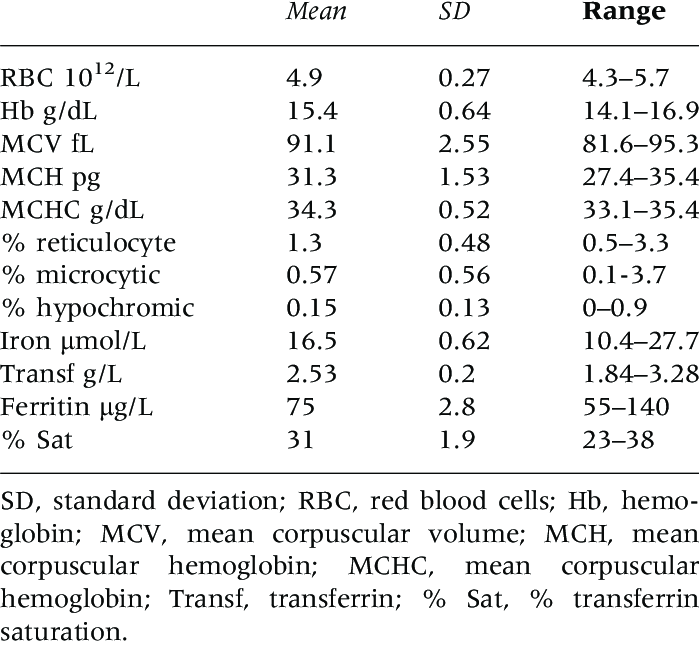
Complete Blood Count Chart
The complete blood count chart beneath demonstrates many normal ranges for various elements of the complete blood count (CBC). Many of the normal ranges vary for males and females. Other elements, including age group as well as ethnic background, may also impact normal ranges. Your physician ought to go over your outcomes together with you. The doctor will consult you further should your results are not in the normal range for your group.

The table below shows some normal ranges for different parts of the complete blood count (CBC).
Some of the normal ranges are different for men and women. Other factors, such as age and race, also may affect normal ranges. Your doctor should discuss your results with you. He or she will advise you further if your results are outside the normal range for your group.
Blood Chemistry Tests/Basic Metabolic Panel

The basic metabolic panel (BMP) is known as a category of lab tests which measures various chemical compounds within the blood. The (BMP) consists of blood glucose, hemoglobin, calcium, as well as electrolyte checks, in addition to blood tests which determine kidney functionality.
Blood Chemistry Test
Blood Glucose
Tests for blood glucose is carried out to see if one has diabetes. Hypoglycemia is that condition in which a person has low degree of glucose and the symptoms include dizziness, weakness, fainting, as well as collapsing.
Blood Glucose Levels
This is a measure of the particular sugar level in your blood. Higher values are usually associated with consuming food prior to the test, as well as a symptom of diabetes.
- The normal range with regard to fasting glucose is 60 -99 mg/dl
- Impaired Fasting Glucose (IFG) is definded by blood glucose levels of 100 – 125
- Diabetes is diagnosed when your plasma glucose levels happen to be of 126 or more
Glycohemoglobin
Glycohemoglobin (Hemoglobin A1c, HbA1c) measures the volume of glucose chemically linked to your red blood cells. A high level indicates poor diabetes control.
Minerals
Calcium is manipulated within the bloodstream by the parathyroid glands and also the kidneys. Calcium can be found mainly inside bone tissue which is very important for proper blood clotting, cell activity as well as nerves. An elevated calcium could be because of prescription drugs like thiazide type diuretics, inherited disorders associated with calcium controlled in the kidneys, or even excessive parathyroid gland activity or vitamin D.
Electrolytes
5 electrolytes which are examined in any blood test include:

- potassium
- sodium
- calcium
- chloride
- bicarbonate
Sodium plays a vital role to maintain fluid balance within your body. You might have low sodium concentration if you are taking diuretics, have kidney disease, or going through diarrhea. A rise in the level of potassium could indicate a kidney problem. An abnormal level of potassium can also be a sign of heart problems. An abnormally low or higher level of bicarbonate is like to indicate kidney problems and the lungs.
Enzyme Tests
Enzymes are chemicals that assist control chemical reactions inside your body. There are several blood enzyme tests.These blood enzyme test include Creatine Kinase (CK) or Protein Electrophoresis both Enzymes are used to check for heart attacks.
Enzymes
The below abbreviations for proteins called enzymes that assist every one of the chemical activities inside body cells to occur.
- Aspartate transaminase (AST)
- Alanine transaminase (ALT)
- Glutamic-oxaloacetic transaminase (SGOT)
- Glutamic-pyruvic transaminase (SGPT)
- Alkaline phosphatase (ALP)
- Gamma glutamyl transpeptidase (GGT)
Liver enzyme testing helps you to monitor the health of the liver. High amounts of both Glutamic-oxaloacetic transaminase (SGOT) and Glutamic-pyruvic transaminase (SGPT) mean liver cells which are damaged, as is the case with people with viral hepatitis. Below is a enzyme reference chart.
Creatine Kinase
Creatine Kinase (CK), also recognized as creatine phosphokinase (CPK) or phospho-creatine kinase is a blood product released once the heart muscle is damaged. High levels of (CK) within the blood often means that you’ve experienced a heart attack.
Protein Electrophores
Protein electrophoresis is also known as Immunoelectrophoresis which is a procedure for examining a mixture of proteins by using gel electrophoresis, primarily in blood serum, the two main classes associated with blood proteins are Serum Albumin and Globulin, both of them are reletively equal in proportion.
Blood Urea Nitrogen
Blood Urea Nitrogen (BUN) is a test to measure the amount of nitrogen within the blood in the form of urea nitrogen and a measurement of renal function. Blood Urea Nitrogen (BUN) is a waste product produced in the liver and excreted by the kidneys. Normal adult blood should comprise among 7 to 21 mg of urea nitrogen per 100 ml (7-21 mg/dL) of blood
Cardiac Risk Markers
C-reactive protein (CRP) test
A (CRP) blood test result is an indication of inflammation somewhere in the body. But the problem is that the (CRP) test will not be able to indicate the part of the body where the inflammation is present. Inflammation is notable role in heart problems like of coronary artery disease, by which fatty deposits clog the arteries. Determining (CRP) alone will not inform your physician of any heart problem but combining it with other blood test results will greatly help in giving an idea of the health of the heart.
Blood Lipids
Blood lipids or blood fats are lipids in the blood. They sometimes attach themself to molecules and mostly transported in a protein capsule. Blood lipids are mainly cholesterol and fatty acids. Cholesterol is a fat-like substance in the blood which, if elevated will cause Hyperlipidemia and has been associated with cardiovascular disease.
Lipoprotein Panel
The below table exhibits ranges with regard to total cholesterol, Low-density lipoprotein (LDL) (“bad”) cholesterol, as well as High-density lipoprotein (HDL) (“good”) cholesterol levels following 7 to 12 hours of fasting. High blood cholestrerol levels is really a danger factor with regard to coronary heart disease.
LDL Cholesterol Chart
Thyroid Function Test
Thyroid
The thyroid’s job is to make thyroid hormone, which is secreted into the blood and then carried to
every tissue in the body. Thyroid hormone is essential to help each cell in each tissue and organ to work right. For example, thyroid hormone helps the body use energy, stay warm, and keep the brain, heart, muscles, and other organs working as they should.
Thyroid function test, there’s 2 types of thyroid hormones simply measurable within the blood, thyroxine (T4) as well as triiodothyronine (T3). Generally the majority of diseases impact both (T4) and (T3) equally. It’s much easier and cheaper to measure the (T4) level, therefore (T3) is generally not really measured.
Hormones Balance Test
Take the hormone balance test to determine if you are suffering from an in-balance of hormones. There are various symptoms for both men and woman. Below are the fundamentals of each hormone.
- Insulin – is a hormone fundamental to controlling carbohydrate and fat metabolism within the body. Insulin will cause cells within the liver organ, muscle, as well as excess fat tissue to take up glucose through the blood saving it as glycogen within the liver along with muscle.
- C-peptide – This serves as a significant linker amongst the A- and also the B- chains of insulin and also allows for the successful construction, folding, as well as processing of insulin within the endoplasmic reticulum.
- Testosterone – It is a male sex hormone, nevertheless both males and females currently have detectable testosterone levels. In males the major supply is in the testicles, in females the ovaries. Like thyroid hormone, this hormone can also be transported through proteins, for instance Sex Hormone Binding Globulin (SHBG).
- Estradiol – Is a sex hormone. Estradiol is abbreviated as E2 because it provides 2 hydroxyl groupings in the molecular structure. Estrone provides 1 (E1) and estriol has 3 (E3). Estradiol is approximately 10 times as potent as estrone and around 80 times as potent as estriol in its estrogenic effect.
Get tested and stay healthy!
Doctors Team
-

Dr. Arthur W. Bracey MD
$40.00 -

Dr. Carlos A. Torres Cabala MD
$40.00 -

Dr. Jennifer L. Wheeler Buenger
$30.00 -

Dr. Kudakwashe R. Chikwava
$50.00
We all need a blood test at some stage in life. At these times, it is best to speak with the physician and have an idea of the tests needed. Once you have the blood test results and are not sure of the meaning, you should talk to the physician again. Sometimes, even when all the blood test results show that things are normal, you might still need to carry out the tests on several occasions to know the true situation.